Why ENS adoption looks like DNS adoption did in 1995

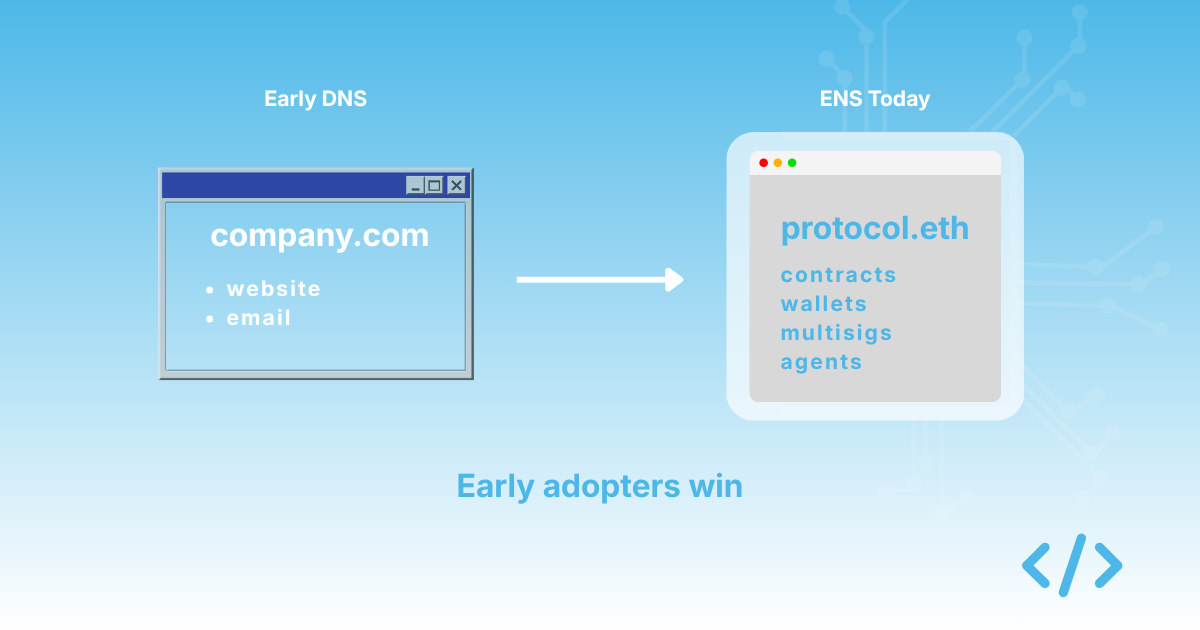
In 1995, most organisations did not have a domain name. The ones that did were not always sure what to do with it. Email and a static website were considered ambitious uses. The idea that an organisation might one day operate the bulk of its identity, infrastructure, and customer relationships through structured DNS namespaces would have seemed unlikely to many business leaders.
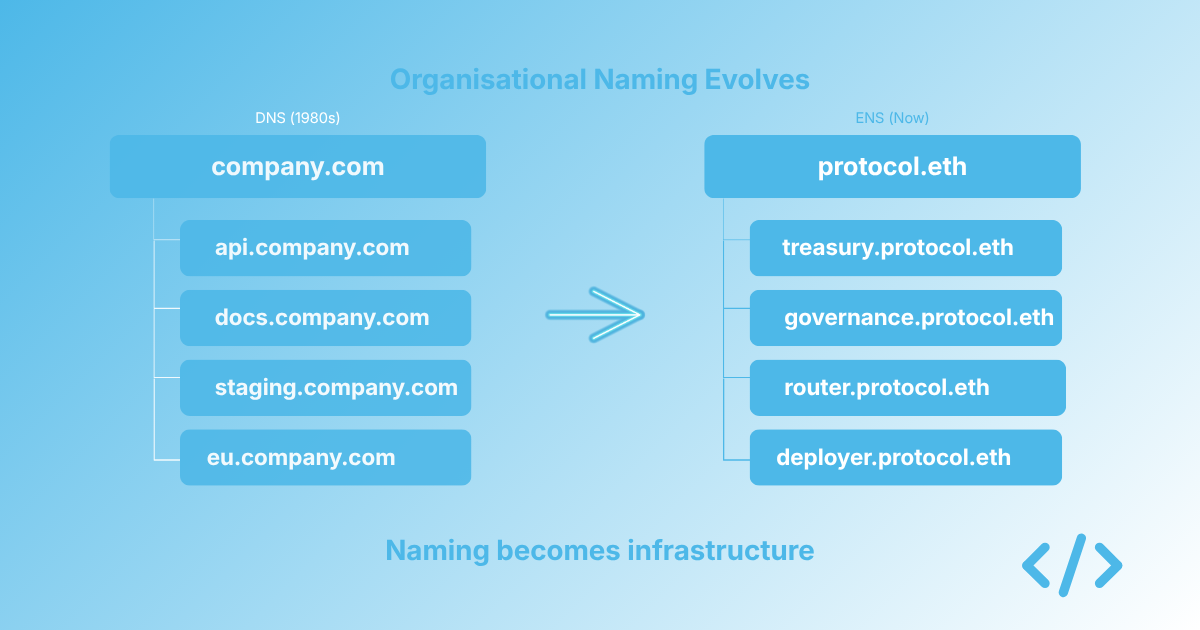
A small number of companies were thinking differently. They saw the trajectory of the internet, recognised that their organisation was going to need to operate in this new environment, and started building the structures that would let them do it. They registered their domains early. They thought about subdomains for departments, products, and services. They put email addresses on business cards before most of their competitors knew what email was for.
Five years later, those companies looked prescient. Ten years later, they looked obvious.
I think we are at a similar inflection point with onchain identity, and the parallel is worth taking seriously.

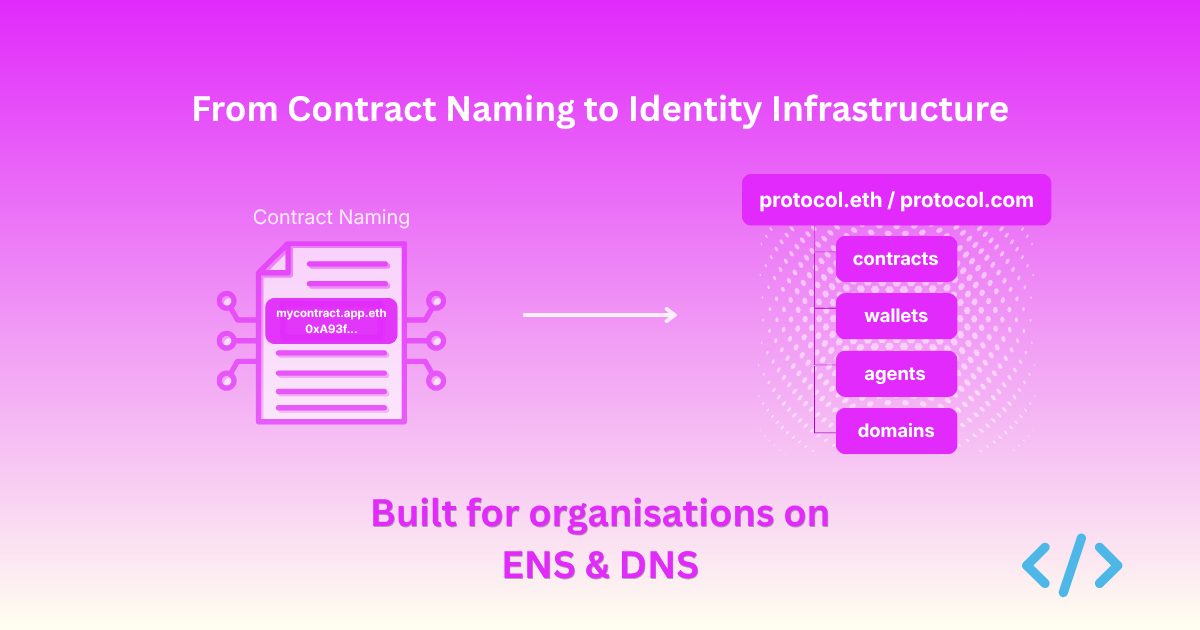
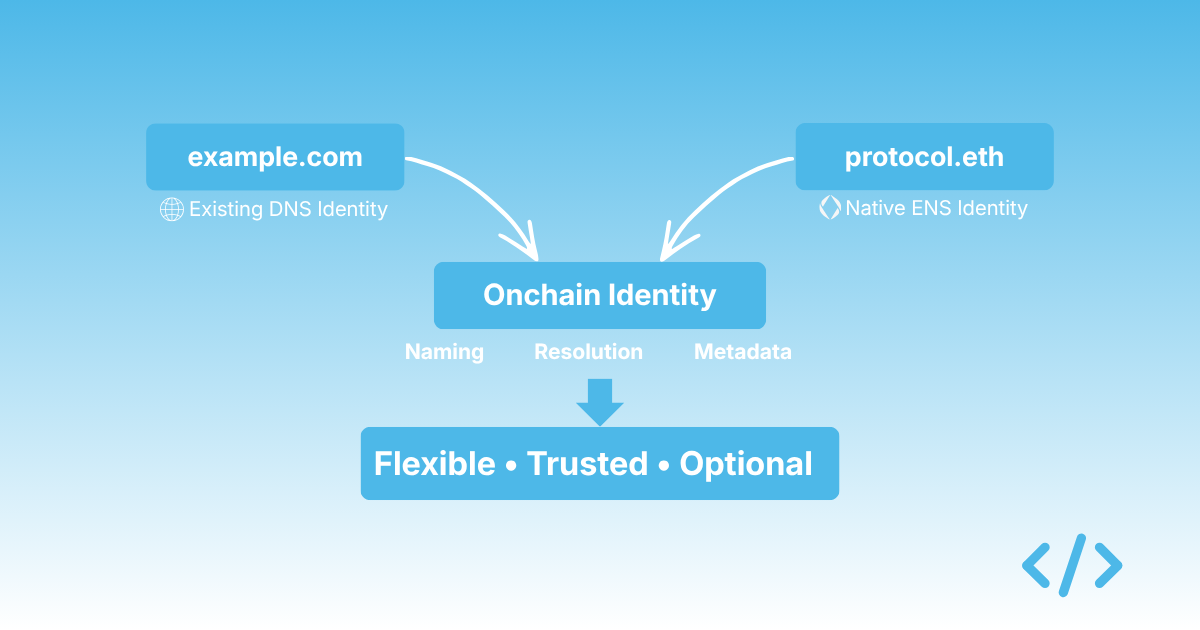
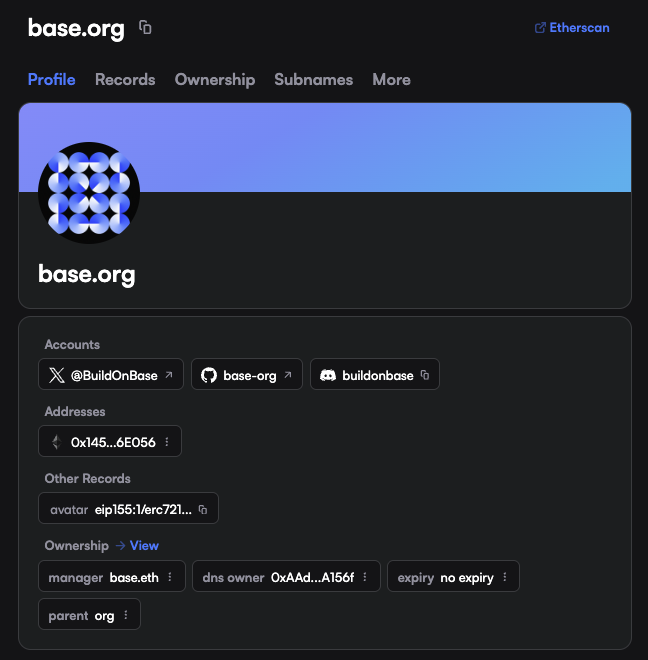 The DNS name