Why hexadecimal addresses are still a security problem
· 5 min read

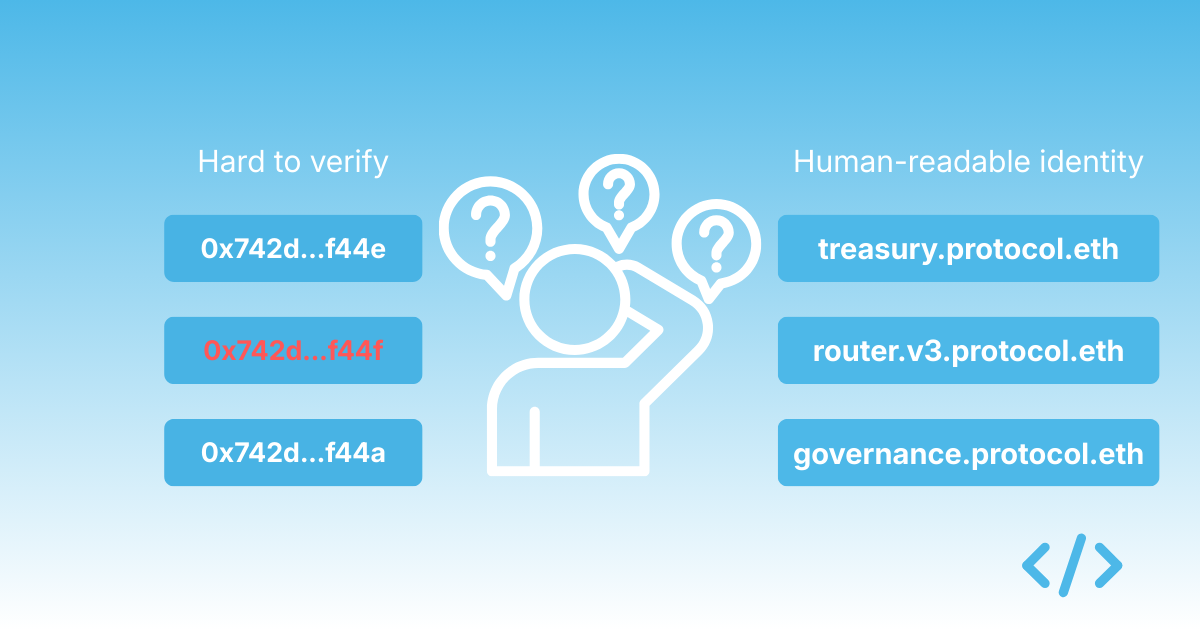
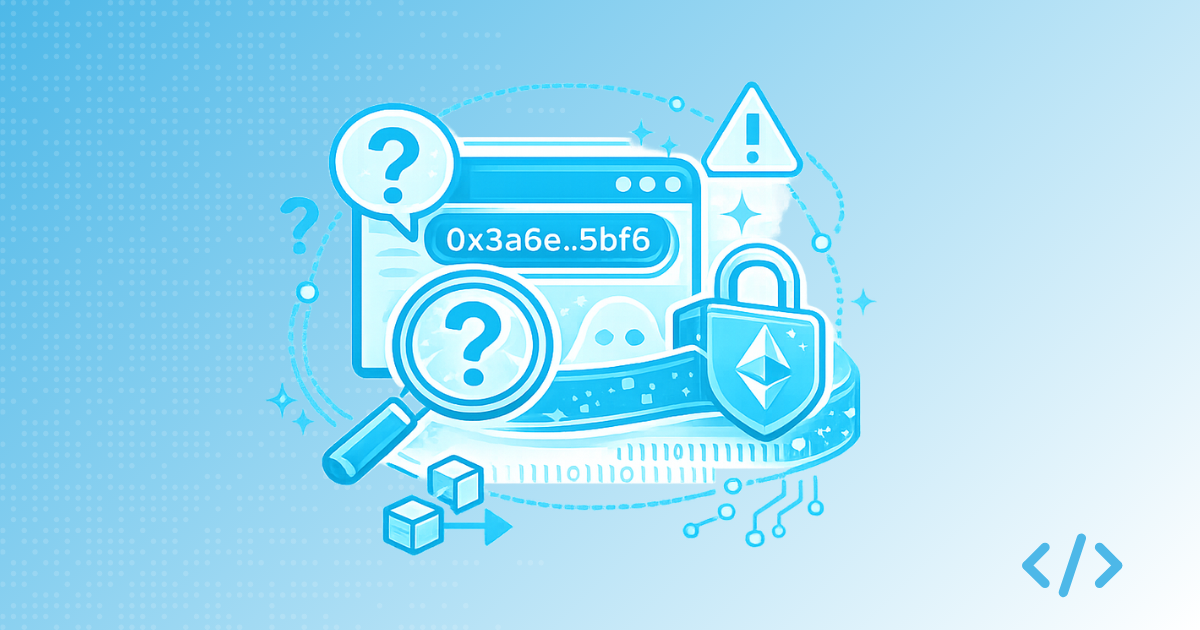
One of the stranger design choices Ethereum inherited early on is that users are still routinely shown raw hexadecimal addresses when they interact with smart contracts. These strings were never meant to be human-readable identifiers — they exist because machines need them, not because humans should be making decisions based on them.
Yet in many wallets and transaction flows today, users are still expected to look at a 42-character hexadecimal string and determine whether the interaction they are about to approve is legitimate. That expectation is only reasonable for developers. For regular people, it asks something the human brain is simply not well-suited to do.